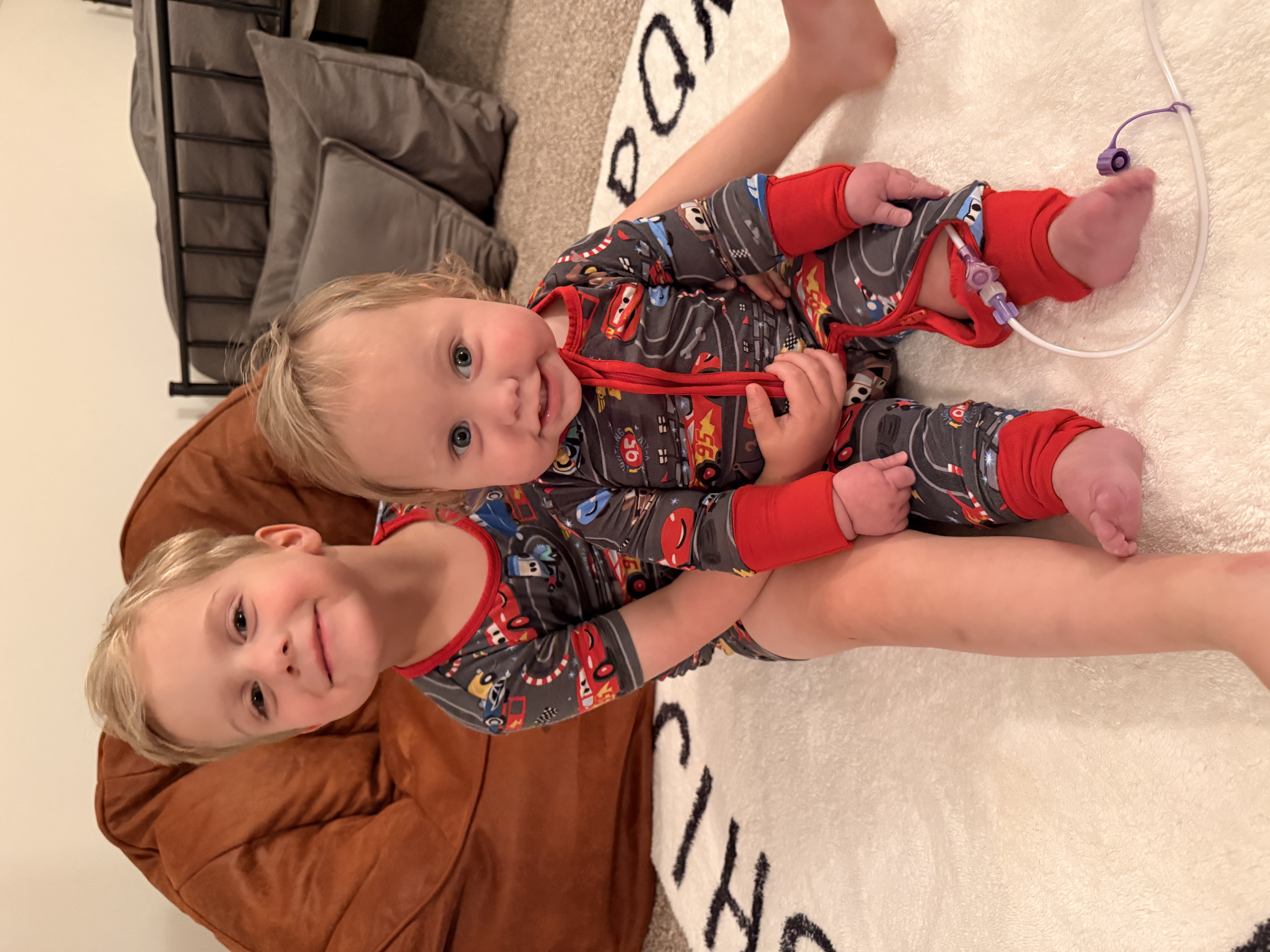

This week, a mother sent us a message about her eight-month-old, who was recently diagnosed with ReNU syndrome.
She and her husband also have a young son who is beginning to ask questions and a young daughter who doesn’t seem to notice her sister’s developmental differences yet.
She asked us when they should talk to their kids about the diagnosis, and whether Emmett understands what is happening with Oliver.
The honest answer is that Emmett understands far more than most people realize.
But it took him a long time to want anything to do with his brother.
For the first nine months of Oliver’s life, Emmett barely acknowledged him. He wouldn’t talk to him, play with him, or try to make him laugh. Unless we pushed him to interact, he mostly acted as if Oliver weren’t there.
It was really hard for us to watch.
We had imagined the usual transition: some jealousy, some curiosity, and eventually two brothers beginning to play together. Instead, we had a three-year-old who seemed determined to keep his distance.
In retrospect, I don’t think he was rejecting Oliver. I think he was scared of everything that arrived with him.
Oliver spent a month in the NICU. After he came home, there were appointments, hospital stays, surgeries, feeding difficulties, medications, medical equipment, and parents whose attention was constantly being redirected.
Emmett couldn’t understand the medical conversations, but he could see that something was wrong. He could see our concern and feel how much his life had changed.
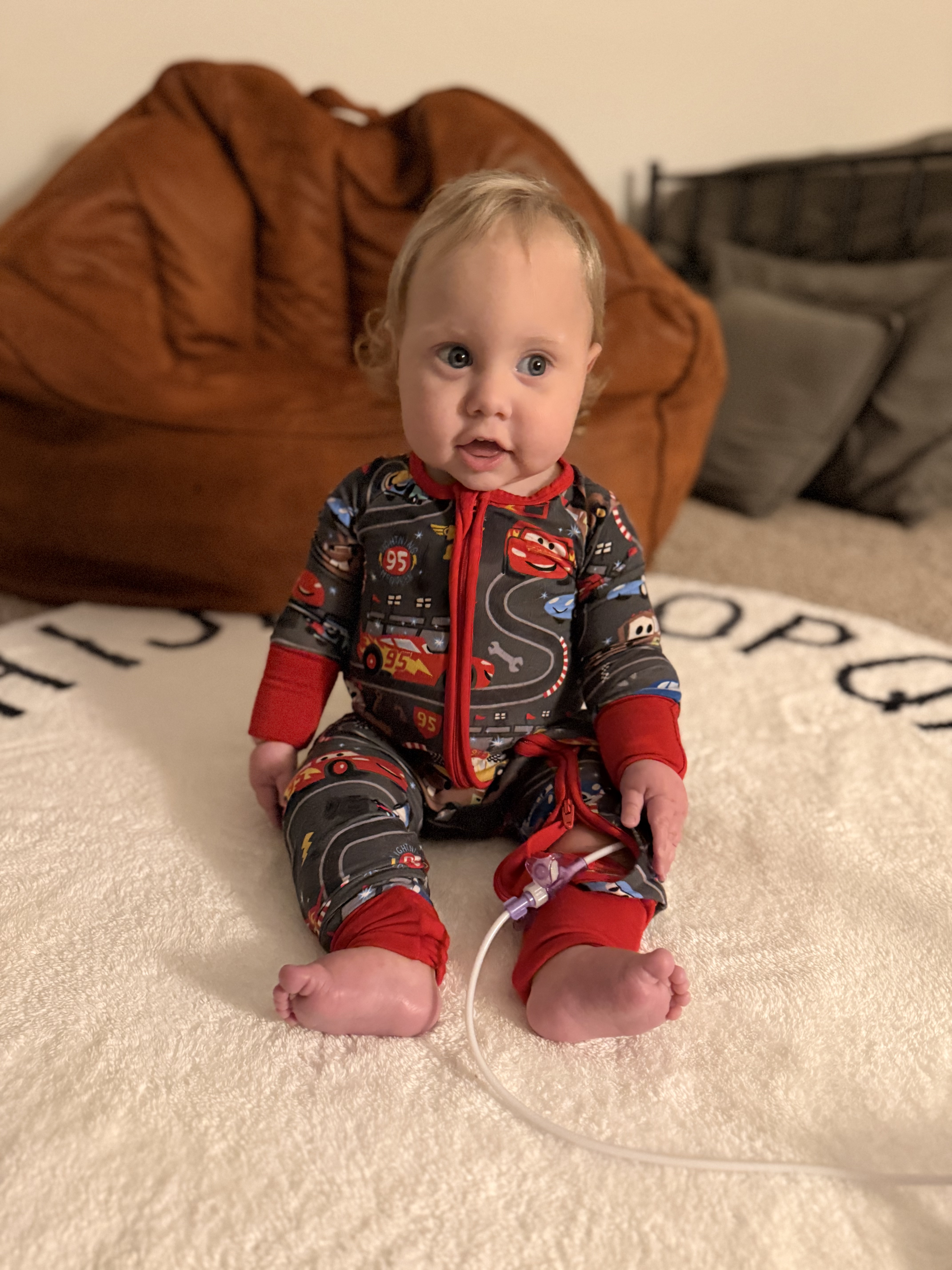
We stopped trying to force the relationship.
At first, I tried too hard to create the relationship we wanted to see. We asked him to sit beside Oliver, talk to him, sing to him, or help make him smile.
Eventually, we realized that pushing him wasn’t making him feel closer to his brother. It was turning the relationship into another thing being asked of him.
So I had to stop measuring their bond by how much affection Emmett showed.
We kept explaining what was happening in simple, direct language. We invited him to help with medications and tube feeds but didn’t make helping his responsibility. We answered the questions he asked without giving him more information than a three-year-old needed.
And then we gave him time.
There was no single breakthrough. He gradually started standing nearby while we cared for Oliver. Then he wanted to bring us supplies. Eventually, he began talking to him, playing with him, and figuring out what made him laugh.
Now, at nearly four years old, we see a completely different relationship.
Emmett is playful and protective of his brother. He knows that Oliver eats through a tube, takes a ton of meds, and goes to many appointments. He understands that ReNU syndrome makes some things harder for Oliver and that he learns differently.
He doesn’t understand the full diagnosis. He doesn’t need to.
Explain what your child can already see.
For us, that means talking about what Emmett already notices:
“Ollie’s body has a hard time eating, so his tube helps him get the food he needs.”
“Some things take longer for Ollie to learn.”
“Ollie can’t tell us what hurts because he can’t talk, so we have to pay close attention.”
“Ollie can’t see, so be as descriptive as you can.”
These are not conversations we waited to have until Emmett was old enough to understand everything. They are small explanations we repeat and expand as he gets older.
Disability should not become the sibling’s job.
We’re also careful not to make disability the source of every expectation we place on him.
Oliver’s diagnosis has changed Emmett’s childhood. He goes to appointments most children never see. Our plans sometimes change because Oliver is sick or needs care. There are moments when he has to wait because his brother’s need is more urgent.
We can acknowledge that without making him feel guilty for finding it difficult. Of course he sometimes finds that difficult. He’s four.
We also don’t want to praise him so heavily for being “such a great brother” that he begins to believe he must always be helpful, patient, or happy about this life.
He is allowed to love Oliver and still dislike what a hard week does to our family.
Truthfully, that’s something I have to remind myself of regularly.
Don’t wait for one perfect conversation.
So if I were answering that family who reached out about their eight-month-old daughter, I would tell them not to wait for one perfect conversation.
Start by explaining what your children can already observe. Answer the question they are actually asking. Invite them to participate without requiring it.
Don’t interpret avoidance, disinterest, or difficult questions as proof that the sibling bond is failing.
And don’t force closeness because you need reassurance that everything will be okay.
For nine months, we worried about what Emmett’s distance meant. What he actually needed was honest information, less pressure, and more time.
This isn’t because we convinced him this was the kind of brother he should be. We gave him the space to become that brother on his own.
I have no idea what their relationship will look like five, ten, or twenty years from now.
But right now, he helps with tube feeds and medications. He plays with Oliver. He works hard for his laughs.
And after spending those first nine months wondering whether they would ever have much of a relationship at all, watching that bond become their own has been one of the sweetest surprises of this life.