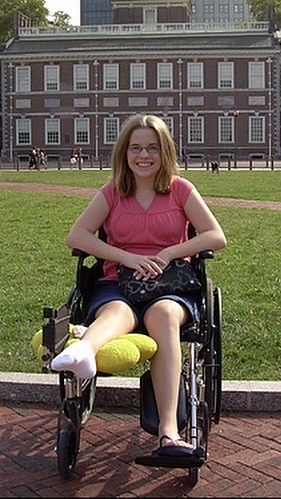
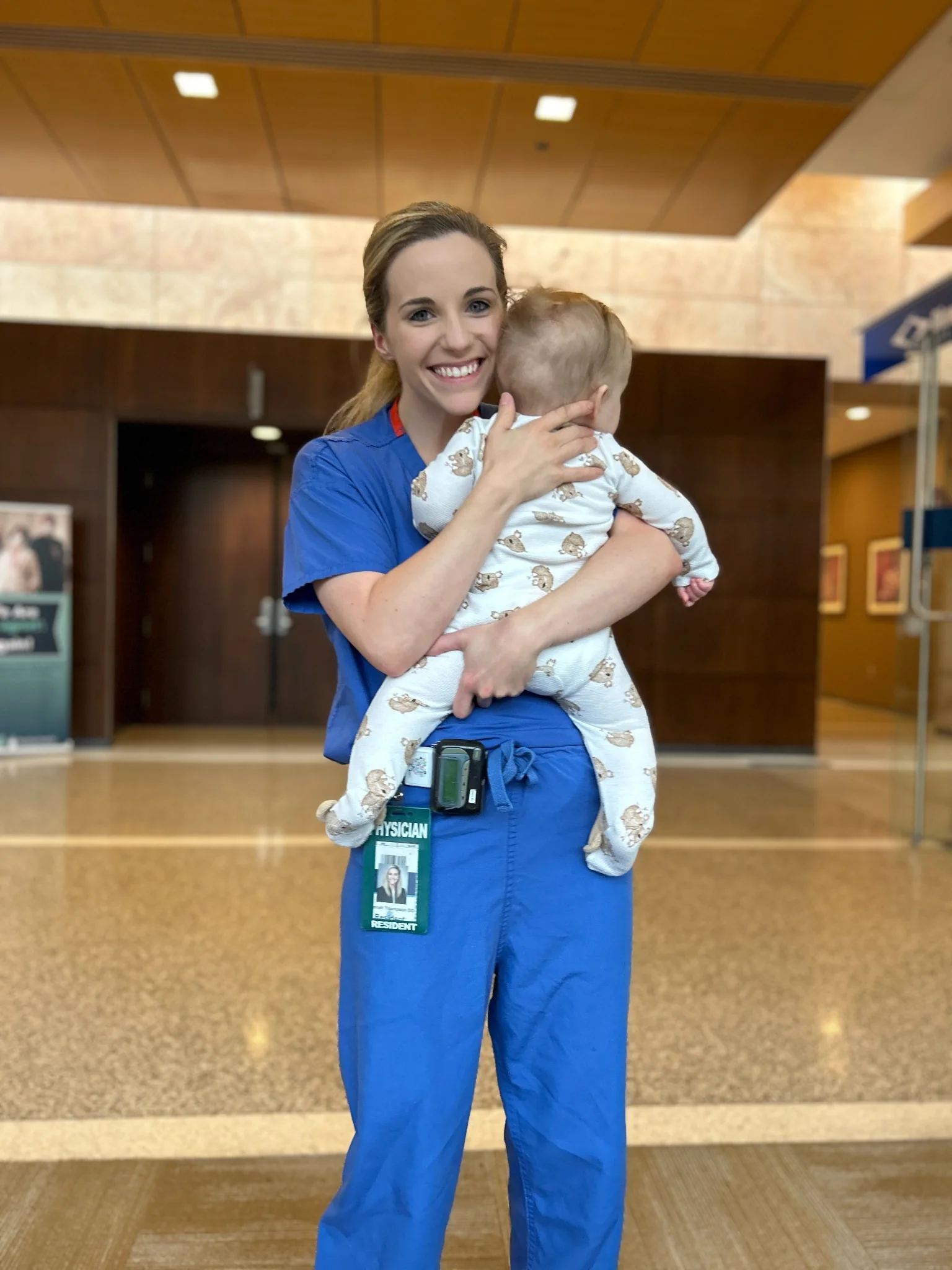
“Sir, we want you to make your daughter comfortable and make sure that you are all prepared for her to never walk again.”
I was a normal 12-year-old kid, but that’s when everything changed. I had spent the afternoon at a skating rink as a reward for making the middle school honor roll. I had been skating and accidentally ran into the side of the rink. I wasn’t hurt but later that night while sitting at our kitchen table, I began to have excruciating pain in my right ankle. Given that I had played sports for years, I was used to having orthopedic injuries and figured this was just another sprained ankle; so we scheduled an appointment with our orthopedic for the next morning. X-rays were negative and he assumed with a few days of rest and crutches I would be good to go. However, days slowly turned into weeks and then into months with continued pain and we knew that this was something completely different than we had ever encountered before.
After meeting with my pediatrician, I was sent for a battery of tests. Doctors were dumbfounded trying to figure out the diagnosis and why the pain was continuing to worsen. After a bone scan, we finally received a call instructing us to go immediately to a larger hospital in Charlotte given an abnormal finding. We were all relieved, hoping this would finally be the answer that we were desperate for.
When we arrived, my parents were escorted out of the room by several doctors to discuss my care and the concerning findings. “Mr. and Mrs. Thompson, the bone scan is concerning for malignancy, so we will need to do additional testing to confirm.” My heart sank. Cancer? How could I be a healthy twelve-year-old with cancer? Thankfully, after several biopsies and additional tests, there was no evidence of cancer. We were relieved but again left without any diagnosis.
After two weeks of our inpatient stay and evaluations by several specialists, we were sent to a larger academic hospital to determine if any of those providers would finally be able to determine the diagnosis. After just a few days in the hospital, we had a suspected diagnosis – Reflex Sympathetic Dystrophy (RSD) or Complex Regional Pain Syndrome (CRPS).
RSD/CRPS is a chronic condition resulting from abnormal neurovascular changes characterized by an abnormal response of the sympathetic nervous system and the corresponding blood flow to an injury. Simply put, this results in chronic pain that is significantly disproportionate to the severity of the initial injury or stimulus. RSD is characterized by prolonged excess pain, swelling, joint stiffness, loss of muscle mass, abnormal skin coloration, and hypersensitivity to cold and touch. Over time, the pain can continue to intensify, or it can spread from the original source to other locations in the body.
Now came the difficult part, how do we treat such a complex condition - especially in a child? This began the longest portion of our journey. While remaining wheelchair-bound, we were referred to several rheumatologists, pain medicine specialists, neurologists, and orthopedic providers. We attempted nerve blocks, continuous epidurals, and even combinations of 18 different pain medications to try and provide pain relief. Nothing seemed to work.
Finally, after much consideration, I had a spinal cord stimulator placed for more constant and long-term pain relief. Although my pain was not completely relieved, I was finally able to sleep and function to continue homeschooling (to not fall further behind). However, after just a few months, the pain progressed, and the spinal cord stimulator no longer provided any relief (even on the highest setting).
That’s when the doctor intervened and said, “We want you to make your daughter comfortable and make sure that you are all prepared that she will never walk again.” We continued to try and remain hopeful as we knew that God could perform a miracle, but we knew we would have to make huge changes as a family as I navigated a life as a wheelchair-bound teenager. My mom quit her job, we built a handicapped-accessible house, and moved closer to family.
Months passed and doctors' appointments became our new normal as we continued to search for treatment options. Our pediatrician, who was a huge support and advocate throughout our entire journey, finally found two potential treatment options. One was an intensive physical therapy program based out of the Children’s Hospital of Philadelphia (CHOP), and one was a ketamine-induced coma program in Mexico. We decided to proceed with the CHOP program and were placed on their waiting list.
After a few months, we were able to meet with Dr. Sherry, where we learned that I was a candidate for their program. So, on the day after Christmas, we left to head to Philadelphia, PA.
Upon arriving at the program, the patients were all taken off their pain medications, spinal cord stimulators were turned off, and patients were forced to face the full brunt of the RSD pain. The program’s goal was to overload the central nervous system with pain signals to eventually re-regulate their abnormal pain responses. As you can imagine, this felt like HELL on earth. Initially, I was in the outpatient version of the program where I lived with my mom at the Ronald McDonald House in Philadelphia. This required us to leave several hours before the start of the physical therapy as it would take me hours to limp and pull myself up the stairs to the physical therapy offices.
Each day was filled with 8-hours of physical, occupational, and psychotherapy. The pain was excruciating. Because of this many kids would become suicidal, cause intentional injuries, or request their families to remove them from the program altogether. A few weeks in, I hit my breaking point. The pain was unbearable, so I began refusing to participate in therapy and begged my parents to just take me home.
My parents knew that this was my only chance (at that time) to fully recover, and made the difficult decision to enroll me in the inpatient version of the program. In this new version, exercises and therapy sessions were associated with a reward system. If I met my daily exercise goals I would get to eat dessert, watch tv, or open care packages from family. But if I did not meet every goal that day, I would not be able to see any visitors – including my parents. As you can imagine, this was painful for both me and my parents.
Finally, after a few weeks of the inpatient program, things did start to improve. I finally had found the inner determination to try and get better. My pain began to lessen, and I was finally starting to see that there may be another side to this journey. I genuinely believed that I would be able to walk again. After 6+ weeks in the program, I was completing my last exercise of the day, when I fell and tore cartilage under my knee. The following day, scans confirmed what we suspected, and we were faced with the realization I would not be able to fully finish the program until after healing from knee surgery.
A few weeks later, I had knee surgery to repair the torn cartilage. When I finally woke up in PACU, my RSD pain was completely gone. After speaking with Dr. Sherry and his team, we learned that some patients can finally respond normally to a new pain signal after going through the program. For me, this meant that because my neurologic system was so overloaded, the pain signal from the knee injury had “restarted” my system, finally allowing a normal injury response to occur.
As you can imagine there were plenty of tears shed as we realized that the hell we had been through for almost three years was finally over and that our prayers had finally been answered.
Our RSD journey did not end there. I spent the next three years in physical therapy in North Carolina, working to rebuild the strength and mobility that had been lost from being wheelchair-bound. Although it would have been easy to live in fear of future injuries and the potential for the RSD to return, we all chose to face life head-on with no regrets. I returned to high school, played varsity sports (volleyball and basketball), and even graduated as valedictorian of my graduating class.
Over the years, I was championed and supported by some of the most incredible physicians and medical professionals. Ones who visited during hospitalizations, mailed care packages to PA, or wore “Hope for Hannah” RSD bracelets to show their support. To this day, I still keep in touch with one of my doctors. It showed that even in the darkest moments of a patient’s life, there are still ways to be a light and make a difference.
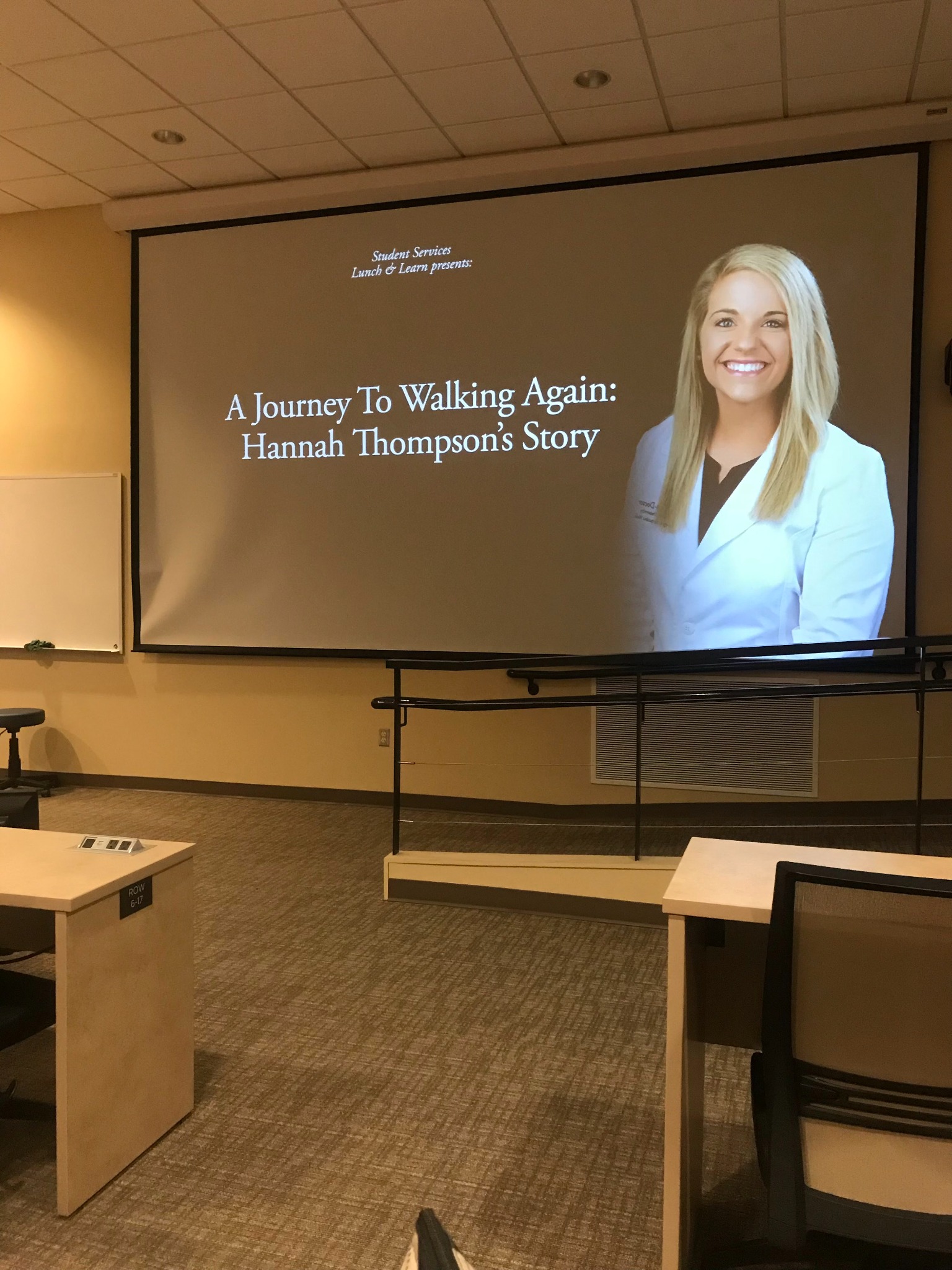
Throughout my RSD journey, I vowed that I would strive to make a difference just as these providers had made such a profound impact on my life. It would have been easy to have become bitter and angry after experiencing the trauma of RSD, but instead, it gave me purpose and a calling.
So this is why I became a physician. To remind patients that they are never alone by walking alongside them through difficult moments and to hopefully make a lasting impact on their lives.