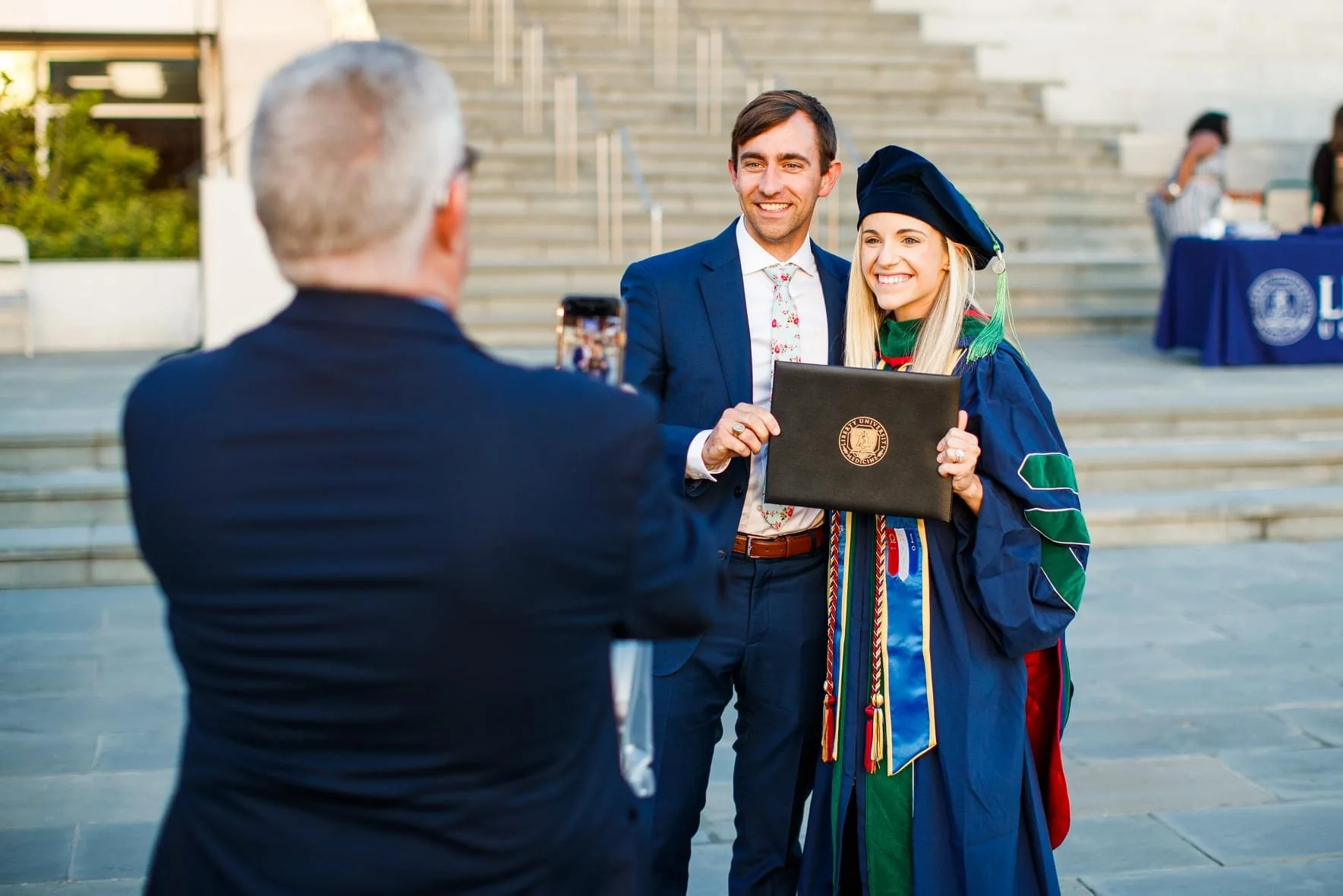

For decades, those in and around medicine have told one side of the story. We celebrate the white coat, the Match Day tears, the long shifts, the fellowships, the attending contracts, and the sacrifice it takes to become a physician.
And we should. Becoming a doctor is hard. The work matters. Patients matter.
But there is another side of medicine that rarely gets named with the same honesty:
- The spouse eating dinner alone again.
- The parent carrying bedtime solo.
- The resident crying in the car before walking into another shift.
- The attending who finally “made it” but still feels absent at home.
- The marriage functioning like logistics.
- The family rearranging itself around a profession that was supposed to serve life, not consume it.
Important disclaimer before you read any further - I’m not writing as a physician. I’m writing as the spouse of an OB/GYN attending. I’ve watched medicine from the kitchen table and the hospital parking lot. I’ve experienced the post-call silence and the burnout that comes from years of training. I’ve experienced the missed holidays and felt the emotional residue after difficult shifts…. So I write this article because I’ve lived the good, bad, and the ugly of being married to medicine and still believe there’s a beautiful purpose in this career field.
They’re not.
Yes, physicians sacrifice time, sleep, emotional energy, years of training, and a decade of delayed income. These are all real - but many families quietly sacrifice alongside them, with no ceremony, no title, no language for their contribution.
- Spouses relocate for residency.
- Partners pause careers.
- Grandparents become backup childcare.
- Children learn that “maybe” means “Dad’s still at the hospital” or “Mom got called in.”
- Households absorb unpredictability as a lifestyle.
And because none of it shows up on a CV, it’s often treated as invisible.
Speaking from firsthand experience, that invisibility is where resentment grows. And where resentment grows, burnout follows.
Burnout Does Not Stay at the Hospital You all know this, but physician burnout has been widely documented. National surveys over the last decade have repeatedly shown high rates of burnout among physicians, with contributing factors such as administrative burden, workload, loss of autonomy, and moral distress. That data matters…but here is what gets missed:
- It spills into the spouse/partner.
- It changes the tone at dinner.
- It shortens patience with kids.
- It turns conversations into transactions.
- It makes a spouse feel like they live with someone physically present but emotionally unreachable.
- It convinces couples they have a marriage problem when they may have a bigger systems problem.
As a result, families often become the shock absorbers of medicine. The reality is - shock absorbers wear down. I’ve felt it, and I’m sure you have too.
Questions Med Couples Should be Asking When people talk about medical training, they usually discuss board scores, specialties, call schedules, debt, compensation, rank lists, etc. It seems fun at the time - but for the family along for the ride, it’s very one-sided. Looking in retrospect, I’ve come to realize that few people ever ask:
- What will this do to my marriage?
- How will we divide household responsibilities when one person’s schedule controls everything?
- What happens when one spouse becomes the default parent for years?
- How do you stay emotionally connected when exhaustion becomes the third person in the room?
- How do you celebrate success that costs both of you something?
- How will their life in medicine change your personal/professional goals?
These shouldn’t be “IF-I-GET-AROUND-TO-THEM” questions to ask halfway through residency. These are real-life questions couples need to ask early and often.
I say that because I was the med-spouse who waited halfway through residency to ask them. By the time I did, I was depressed, exhausted, frustrated, and resentful. So I know what it feels like to support a dream and feel swallowed by it at the same time.
However, over the years, I’ve come to learn that both things can be true.
- You can be proud of your physician spouse and still grieve what the process has taken.
- You can love medicine’s purpose and hate what its structure does to the family.
- You can be grateful and tired.
- You can be committed and frustrated.
- You can be hopeful and honest.
Too many families think these tensions mean they’re failing - but I’m realizing that it often means you’re normal.
The Physician Story We Need to Say Better Having been with Hannah through medical school, residency, and attendinghood, I can’t ignore the burdens she carries that many families cannot fully see.
Every single day, physicians:
- Make high-stakes decisions.
- Witness the worst kind of trauma.
- Work through physical and mental fatigue.
- Absorb patient pain.
- Feel pressure to perform, produce, document, endure, and stay silent.
- Some come home wanting to connect, but simply have nothing left.
- Some feel guilt no matter where they are - at work missing home, or at home thinking about work.
- Some were trained to suppress needs so deeply that they no longer know how to articulate them.
This matters because it can be so easy to interpret silence as indifference in marriage. But more often than not, it’s not indifference, it’s depletion, and they don’t know what to do about it. That doesn’t excuse disengagement, but it helps explain it. And I hope that’s a mental lightbulb for you medspouses like it was for me. That realization completely transformed the way I supported and communicated with Hannah after difficult shifts/blocks.
Where Families Go From Here Medicine has asked families to adapt to unhealthy norms for too long.
- We normalize chronic absence.
- We glamorize overwork.
- We praise endurance more than wholeness.
- We call dysfunction “just a season” even when the season lasts more than a decade.
Then we act surprised when marriages strain, identity fractures, and physicians wonder why achievement feels emptier than promised. Over time, couples realize that a bigger paycheck doesn’t heal disconnection. New titles can’t parent your children. Prestige can’t replace presence. And no hospital award will sit beside your spouse when they feel lost and alone.
If that’s a wake-up call to the physicians reading this, GOOD. I want this to sound sharp because the stakes are high. Families are not accessories to your medical career. They are part of the cost, and part of the solution.
I think I can speak for most partners and say that we are not asking our doctor spouses to leave their careers because they’re needed at home; rather, it is the opposite. Stay! We want you to do what you love. We will continue to love you and champion you forward. But here is our ask - meaningfully show a mutual love and respect for what we do (no matter what that looks like… ie, SAHP, PT, FT, high income, low income, it doesn’t matter). Treat your spouse as an equal. Value their contributions in the same way you value your own. We have supported you every step of the way (often at the cost of our own dreams), and your acknowledgment of those ongoing sacrifices is a great starting point in building lasting respect for each other’s responsibilities.
Our Family Learned This the Hard Way In our own home, we had to confront what mattered most.
We’ve navigated medicine. We’ve navigated parenting. We’ve navigated caring for a child with special needs. We’ve learned that efficiency can’t solve everything. A higher income can’t solve everything. Achievement can’t solve everything.
Sometimes the breakthrough is not earning more (which was hard for me to let go of). It is reordering more.
For us, that meant making difficult decisions about my time, work, and priorities so our family had more margin and our boys had more focused care.
That choice may not be everyone’s path. But the principle is universal: If your life is breaking under the weight of your current model, loyalty to the model isn’t going to fix it. Just find a new model.
What Hope Actually Looks Like Hope is not pretending that life in medicine will become easy. We all know that’s unrealistic. But I believe hope is knowing families can become stronger even inside a hard system.
Here’s what I believe hope looks like:
- A physician learning to come home emotionally, not just physically (we’ll get to this later on).
- A spouse naming needs before resentment calcifies.
- A couple refusing to keep score.
- A family building support without shame.
- A household making values-based decisions instead of image-based ones.
- A doctor realizing success at work and failure at home is not true success.
- A spouse realizing their identity matters too.
I do not believe hope is found in waiting for training to end, the next contract, the next promotion, or the mythical easier season. I believe hope begins when we tell the truth about the season we’re already in.